

2026-09-30
Building a successful kids entertainment center requires more than placing standard play equipment inside a large room.
For commercial operators, an indoor playground is not only a play area. It is a customer attraction, a family experience space, and an important part of the overall business model.
This is why many investors and FEC operators choose custom indoor playground design instead of ready-made playground packages.
A customized playground can be adjusted according to:
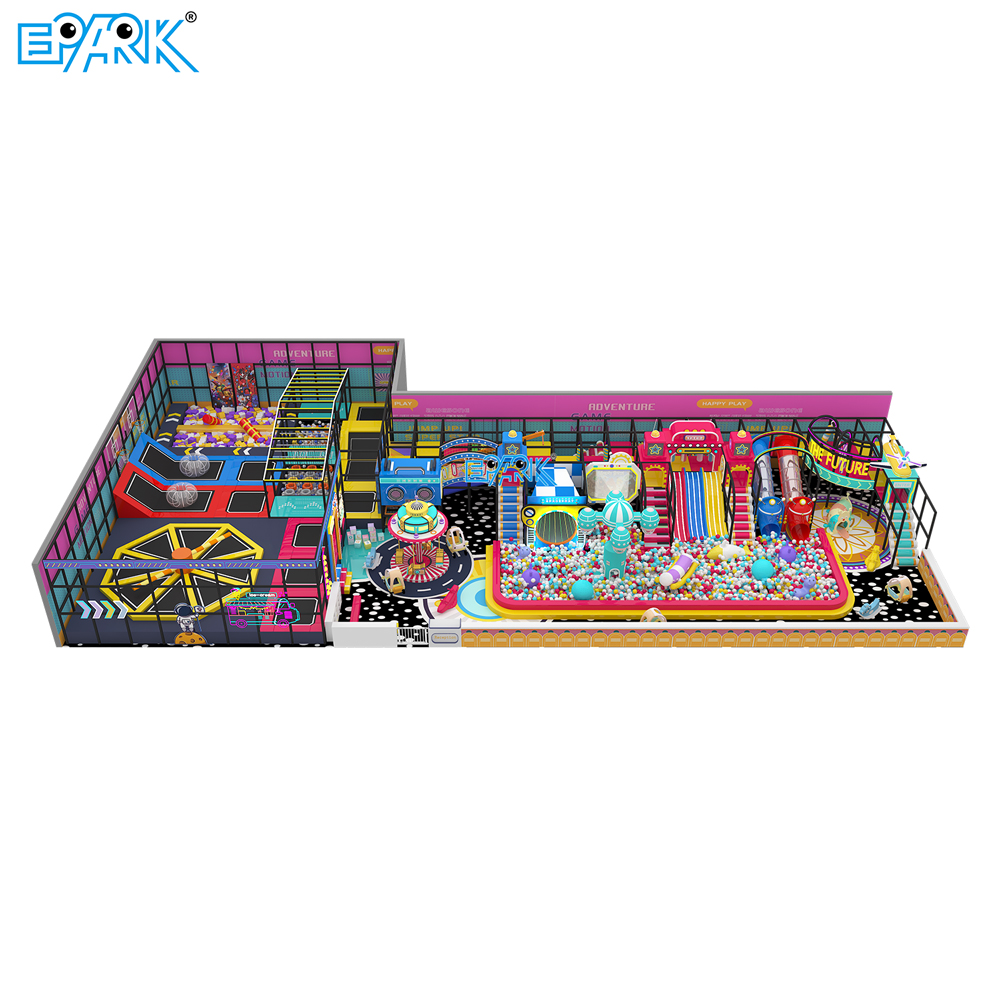
Modern playground projects often use customized layouts, themes, equipment combinations, and 3D designs to create a space that matches the specific business environment.
So, what exactly can be customized?
A standard playground may look attractive, but commercial spaces rarely have identical conditions.
A shopping mall unit, family entertainment center, hotel kids area, or standalone indoor playground each has different requirements.
A customized design helps operators solve practical problems:
For example:
A small 100㎡ kids area may focus on compact soft play equipment and toddler activities.
A 1,000㎡ FEC may require multiple zones, including:
A successful design starts with the business objective, not only the equipment itself.
Many buyers think customization only means changing colors.
In reality, commercial playground customization can include:
| Custom Area | What Can Be Adjusted |
|---|---|
| Layout | Equipment position, pathways, activity zones |
| Theme | Colors, graphics, decorations, storytelling |
| Equipment | Slides, climbing areas, soft play modules |
| Age Zones | Toddler, kids, family activity areas |
| Branding | Logos, mascots, visual identity |
| Space Planning | Adaptation to building structure |
A complete customization project usually combines design, engineering, manufacturing, and installation planning.
The first customization decision is usually the space itself.
A professional supplier should consider:
A good layout should not simply maximize equipment quantity.
It should also consider:
For example:
A narrow venue may benefit from vertical structures.
A large open venue may use multiple activity zones to create longer customer journeys.
EPARK provides indoor playground and entertainment project planning services, including venue layout and 3D design support based on customer project requirements.
Theme design is one of the most visible parts of customization.
Popular concepts include:
However, a good theme should not only look attractive.
It should also support:
A professional design can customize:
For branded entertainment centers, customized visual identity can help create a stronger connection between the venue and customers.
Different age groups require different play experiences.
A commercial indoor playground may include:
Designed for younger children:
Suitable for active play:
For larger venues:
The equipment combination should match:
EPARK supplies indoor playground equipment and complete entertainment solutions for different project sizes, from smaller play spaces to larger entertainment centers.
Customization should always balance creativity and safety.
Important considerations include:
Commercial playground buyers should ask suppliers:
For international projects, buyers should also confirm applicable local safety requirements before production.
A customized playground can become part of a larger entertainment brand.
Possible branding elements include:
For FEC operators, these elements help create:
A playground is not only equipment. It is part of the customer's overall journey.
From a supplier perspective, many customers initially focus on appearance.
However, successful projects usually depend on deeper planning.
The most common customer needs include:
A professional manufacturer normally supports:
EPARK operates as an amusement equipment manufacturer and entertainment solution provider, supporting OEM/ODM projects, customized equipment, venue planning, installation, and after-sales technical support. 我司信息
A typical custom playground project includes:
| Stage | Main Work |
|---|---|
| 1. Requirement Analysis | Understand venue, customers, budget |
| 2. Layout Design | Create floor plan |
| 3. 3D Design | Visualize final concept |
| 4. Equipment Confirmation | Select play structures |
| 5. Manufacturing | Produce customized equipment |
| 6. Installation | Complete site setup |
Early planning helps reduce changes during production and improves project efficiency.
A beautiful playground may still have problems if:
The venue should determine the equipment selection.
Not the other way around.
A good design should consider:
You can customize layouts, themes, colors, equipment combinations, branding elements, and activity zones.
Custom designs can better match venue conditions, target customers, and business goals.
Yes. Small venues can use compact layouts and carefully selected equipment combinations.
The timeline depends on project size, design complexity, production requirements, and installation arrangements.
Many professional suppliers provide 3D concepts to help customers review the final appearance before manufacturing.
Prepare:
A successful kids entertainment center needs more than attractive equipment.
The best custom indoor playground design combines:
For investors and operators, choosing an experienced playground supplier can simplify the process from concept design to final installation.
EPARK supports customized indoor playground and entertainment projects with design, manufacturing, equipment solutions, and technical services for commercial entertainment venues.


