

2026-10-22
Choosing between an indoor playground and an outdoor playground is an important decision for investors, family entertainment center (FEC) operators, and commercial property developers.
Both business models offer opportunities to attract families, provide children's entertainment, and create additional revenue streams. However, they differ in startup costs, equipment requirements, operating conditions, maintenance, and long-term business potential.
An indoor playground offers a controlled environment where children can play regardless of most weather conditions. An outdoor playground provides open-air recreation, often with more space for larger physical activities.
But which option makes more sense as a commercial investment?
The answer depends on your location, climate, target customers, budget, and business strategy.
This guide compares indoor playground vs outdoor playground business models, including equipment selection, installation costs, safety requirements, revenue opportunities, and practical considerations to help you make an informed investment decision.
Before comparing investment costs and profitability, it is important to understand how these two playground models operate.
An indoor playground is a recreational facility located inside an enclosed building. It typically features soft play structures, slides, ball pits, climbing areas, tunnels, and other interactive attractions designed for children.
Commercial indoor playgrounds are commonly found in:
Shopping malls
Family entertainment centers
Children's activity centers
Commercial entertainment complexes
Hotels and resorts
Dedicated indoor play centers
Many indoor playground businesses charge admission fees and offer additional services such as birthday parties, family memberships, refreshments, and group activities.
Because the environment is enclosed, operators can manage temperature, lighting, entry access, and many aspects of the visitor experience.
This makes indoor playgrounds an option for businesses that want to operate in different weather conditions throughout the year.
An outdoor playground is a play area located in an open-air environment.
Outdoor playground equipment may include swings, slides, climbing frames, seesaws, balance structures, and other physical activity facilities.
Commercial outdoor playgrounds can be found in:
Theme parks
Resorts and hotels
Tourist attractions
Recreational parks
Family leisure destinations
Outdoor entertainment complexes
Some outdoor playgrounds are free public facilities, while others operate as part of paid attractions or private entertainment businesses.
For commercial investors, outdoor playgrounds often work best when integrated into a larger destination with established visitor demand.
The following comparison highlights the main differences between the two business models.
| Factor | Indoor Playground | Outdoor Playground |
|---|---|---|
| Environment | Enclosed and climate-controlled | Exposed to outdoor conditions |
| Weather dependency | Generally lower | Usually higher |
| Location | Malls, buildings, entertainment centers | Parks, resorts, outdoor attractions |
| Main equipment | Soft play structures, ball pits, slides | Swings, climbing frames, outdoor slides |
| Space requirements | Depends on building dimensions | Depends on land and site conditions |
| Operating expenses | Rent, HVAC, electricity, staffing | Groundskeeping, weather protection, maintenance |
| Equipment durability | Primarily indoor-use materials | Weather-resistant materials required |
| Revenue options | Admission, parties, memberships, add-on attractions | Admission, events, bundled attraction tickets |
| Business risks | Rent, occupancy, indoor operating expenses | Weather, seasonality, equipment exposure |
| Expansion | Limited by building space and structural conditions | Limited by land, approvals, and site infrastructure |
Neither option is automatically more affordable or more profitable.
An indoor playground may require significant spending on rent, air conditioning, interior decoration, and fire safety systems.
An outdoor playground may require land preparation, drainage, protective surfacing, shade structures, and weather-resistant equipment.
The better investment depends on the total project requirements rather than equipment prices alone.
Startup costs are often one of the first concerns for playground investors.
However, comparing indoor and outdoor playground construction costs requires more than looking at the price of play equipment.
An indoor playground project may require investment in the following areas:
1. Property rental or acquisition
Indoor playground businesses commonly operate in rented commercial properties.
Rental expenses may represent a substantial portion of the monthly operating budget, particularly in shopping malls and busy commercial districts.
2. Interior construction
The venue may require flooring, walls, electrical installation, ventilation, lighting, fire protection systems, and customer reception areas.
3. Playground equipment
Equipment costs depend on floor area, play structure height, customization, materials, and the number of attractions.
4. Supporting facilities
Additional expenses may include reception counters, seating, lockers, CCTV, cleaning equipment, and payment systems.
5. Working capital
Operators should reserve sufficient funds for payroll, rent, maintenance, marketing, insurance, and the initial operating period.
Outdoor playground projects have a different cost structure.
Major expenses may include:
Land purchase or rental
Ground preparation and leveling
Drainage infrastructure
Playground equipment and foundations
Impact-attenuating safety surfacing
Shade structures and weather protection
Fencing and access control
Landscaping and lighting
Inspection and maintenance equipment
Outdoor projects may require less enclosed building space, but significant civil engineering and site preparation work can increase the total investment.
There is no universal answer.
A compact indoor soft play center inside an existing commercial unit may cost less to establish than a large outdoor playground requiring extensive ground preparation.
On the other hand, an outdoor play area installed on already-owned, suitable land may avoid some of the rental expenses associated with an indoor venue.
For a meaningful comparison, investors should request separate estimates for equipment, construction, installation, permits, utilities, insurance, and operating costs.
The key principle is to compare total investment and ongoing expenses, not simply the purchase price of the playground equipment.
Equipment selection directly affects the play experience, maintenance requirements, capacity, and overall appearance of the playground.
Indoor playgrounds commonly use soft, padded, and modular play structures.
Typical equipment includes:
Soft play climbing structures
Ball pits
Slides and tunnels
Obstacle courses
Toddler play zones
Interactive play panels
Soft bridges and crawl areas
Age-appropriate climbing attractions
Larger indoor entertainment centers may also combine children's play areas with arcade games and other attractions, provided they are properly separated and designed for the intended users.
One advantage of indoor playground equipment is design flexibility.
Modular structures can be configured according to the venue's available area, ceiling height, columns, and target age group.
Outdoor playgrounds commonly feature:
Outdoor slides
Swing sets
Climbing frames
Balance equipment
Rope play structures
Activity towers
Seesaws
Outdoor obstacle courses
Outdoor equipment must be suitable for environmental exposure.
Depending on the location, materials may need to withstand rain, sunlight, humidity, temperature changes, and corrosion.
Ground conditions and safety surfacing also play important roles in outdoor equipment selection.
Indoor soft play systems can be especially suitable for themed commercial projects where operators want customized layouts, colors, and play zones.
Outdoor playgrounds can offer greater freedom for large-scale physical activities when sufficient land and suitable site conditions are available.
The decision should consider the age of the intended users, play capacity, local standards, inspection requirements, and available space.
Guangzhou EPARK Electronic Technology Co., Ltd. supplies indoor playground equipment and commercial amusement products for family entertainment centers.
Its product range includes soft playground equipment, children's interactive attractions, arcade machines, and other entertainment equipment.
EPARK supports project planning, equipment configuration, and customized designs based on venue dimensions and customer requirements.
For operators developing a shopping mall playground or indoor family entertainment center, integrating the indoor play area with complementary amusement machines may create a broader entertainment offering.
Explore indoor playground equipment and entertainment solutions to evaluate suitable equipment categories for commercial projects.
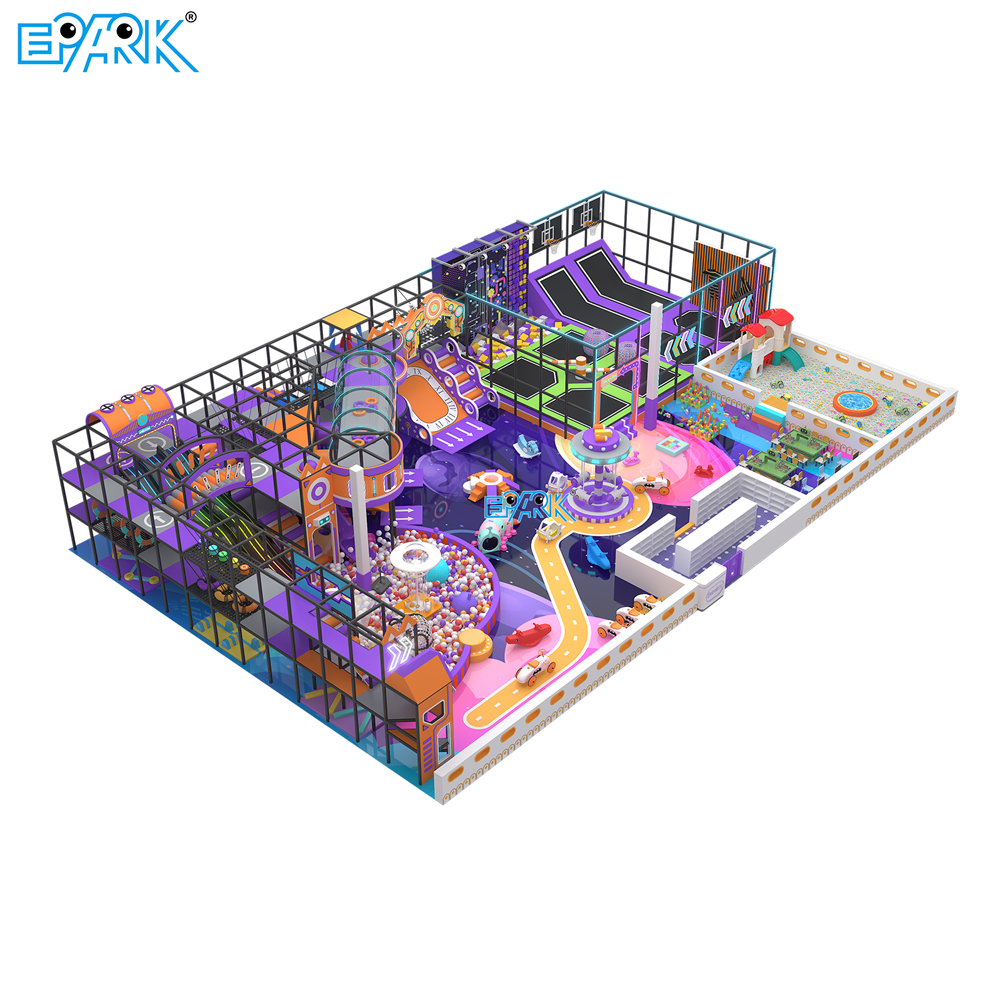
Location and climate are critical factors when comparing indoor and outdoor playground investments.
Indoor playgrounds generally provide a more predictable operating environment because activities are not directly exposed to rain, strong sunlight, or cold outdoor conditions.
This can be particularly valuable in regions with long rainy seasons, extreme heat, or cold winters.
However, indoor playgrounds still depend on reliable HVAC systems, building services, safe occupancy levels, and accessible transportation.
A climate-controlled environment can help operators maintain consistent opening schedules, but it does not guarantee steady customer demand.
Outdoor playgrounds provide fresh air and open space, but operating conditions can change throughout the year.
Heavy rain, thunderstorms, extreme temperatures, strong winds, and other weather events may reduce attendance or require temporary closures.
Equipment exposed to sunlight and moisture may also require additional inspection and maintenance.
For businesses in climates with long periods of favorable weather, an outdoor playground can still be an attractive option.
The important question is how many days per year the facility can realistically operate and attract visitors.
Indoor playground layouts are influenced by building dimensions, ceiling height, structural columns, exits, and occupancy restrictions.
Outdoor playground layouts depend on land size, terrain, drainage, equipment spacing, safe use zones, and site access.
Before purchasing equipment, obtain accurate measurements and identify all areas that cannot be used for play installations.
For an indoor project, a 3D layout can help visualize equipment positioning, reception facilities, seating, and customer circulation.
EPARK offers layout planning and 3D design support for indoor entertainment projects, allowing buyers to review equipment configurations before production and installation.
Both indoor and outdoor playgrounds can generate revenue, but the business models may differ significantly.
Commercial indoor playgrounds commonly use several revenue streams.
Admission fees: Customers purchase tickets for individual visits or timed play sessions.
Membership programs: Repeat customers purchase monthly or multi-visit access packages.
Birthday parties: Operators provide private party areas, group packages, and optional decorations.
Food and beverages: Some venues offer refreshments or operate family cafés, subject to local food service requirements.
Additional entertainment: Larger family entertainment centers may add arcade games, redemption machines, or other attractions.
Multiple revenue sources can help an indoor playground reduce its dependence on single-entry ticket sales.
Outdoor playground businesses may generate income through:
Paid admission
Group reservations
School activities
Private events
Resort or theme park packages
Seasonal attractions
Food and beverage services
Outdoor playgrounds are frequently integrated into larger entertainment destinations.
For this reason, the playground's financial contribution may include attracting visitors to other paid activities rather than generating direct playground admission revenue alone.
Profitability depends on visitor volume, average spending, operating expenses, and capital investment.
An indoor playground may have higher recurring building and energy expenses, but it can potentially operate on more days of the year.
An outdoor playground may have lower enclosed-building expenses, but weather-related closures and seasonal attendance can create revenue fluctuations.
Consider this simplified financial example:
| Operating Metric | Indoor Playground | Outdoor Playground |
|---|---|---|
| Average paying visits per open day | 80 | 110 |
| Average revenue per paying visit | $12 | $10 |
| Operating days per month | 30 | 22 |
| Illustrative monthly revenue | $28,800 | $24,200 |
These numbers are hypothetical examples, not industry averages or guaranteed results.
The indoor and outdoor facilities would still need to deduct rent, labor, maintenance, insurance, utilities, marketing, taxes, and other expenses before calculating profit.
A realistic business plan should model conservative, expected, and optimistic attendance scenarios.
Safety and regulatory compliance are essential for any commercial playground project.
The relevant requirements depend on the country, equipment type, installation environment, and age of the intended users.
Indoor soft contained play structures require careful attention to padded surfaces, structural stability, access points, cleaning, evacuation, and ongoing inspection.
In the United States, ASTM F1918-21 addresses safety performance requirements for soft contained play equipment.
Operators should review the applicable requirements for their equipment and consult qualified professionals regarding building codes, fire safety, occupancy, and accessibility.
Outdoor playgrounds require attention to equipment condition, protective surfacing, fall hazards, weather exposure, and ground stability.
The U.S. Consumer Product Safety Commission provides a Public Playground Safety Handbook with guidance on playground design, equipment, surfacing, and maintenance.
ASTM F1487 applies to certain public-use playground equipment, while soft contained play equipment is covered by a different standard.
Operators should not assume that one playground standard applies to every attraction.
Commercial playgrounds may also be subject to accessibility requirements.
For U.S. projects, applicable ADA Standards include provisions concerning accessible routes and play components.
These requirements can affect site design, equipment selection, access points, and surface materials.
Official references include:
CPSC Public Playground Safety Handbook
ASTM F1918 Soft Contained Play Equipment Standard
U.S. Access Board Accessibility Standards
Indoor playground maintenance often focuses on cleaning, surface condition, fastening systems, padded components, and general wear.
Outdoor playground maintenance additionally involves weather-related deterioration, corrosion, drainage, surface displacement, and environmental damage.
Both environments require documented inspections and prompt correction of identified hazards.
When sourcing equipment, ask suppliers for installation instructions, applicable testing documentation, maintenance guidance, and replacement part information.
There is no single playground experience that suits every family.
Customer preferences depend on children's ages, climate, accessibility, convenience, and available attractions.
Indoor playgrounds can appeal to families looking for supervised entertainment in a controlled environment.
Parents may appreciate convenient access to seating, restrooms, refreshments, and nearby shopping facilities.
Indoor settings can also support organized birthday parties and scheduled group activities.
For shopping mall operators, an indoor playground may encourage families to spend more time at the property.
Outdoor playgrounds provide opportunities for physical movement, exploration, and interaction with the surrounding environment.
Larger sites may accommodate spacious climbing structures, nature-themed play features, and outdoor group activities.
These experiences can be especially attractive in parks, resorts, and family tourism destinations.
Younger children may benefit from dedicated, age-appropriate soft play zones with clear separation from older users.
Older children may prefer more challenging climbing and obstacle activities.
Regardless of location, commercial playgrounds should provide age-appropriate equipment, clear operating rules, and suitable supervision arrangements.
A business designed for toddlers will have different layout and equipment requirements from one targeting older children.
The best choice depends on your available resources and commercial objectives.
Use the following decision matrix as a starting point.
| Business Situation | Option to Consider | Main Reason |
|---|---|---|
| Shopping mall entertainment project | Indoor playground | Fits enclosed retail environments |
| Location with frequent rain or extreme temperatures | Indoor playground | Less direct exposure to weather |
| Resort with extensive outdoor land | Outdoor playground | Supports open-air recreation |
| Family entertainment center with arcade machines | Indoor playground | Easier integration with indoor attractions |
| Nature-themed tourism destination | Outdoor playground | Connects play with outdoor surroundings |
| Business focused on birthday party packages | Indoor playground | Controlled environment for scheduled events |
| Large leisure property with indoor and outdoor areas | Hybrid playground | Offers complementary experiences |
These are general planning recommendations rather than rules.
An indoor playground may be the stronger option when:
The business is located inside a commercial building.
Weather conditions limit outdoor recreation.
The operator wants to offer scheduled parties and memberships.
The project will combine soft play with other indoor entertainment.
Controlled operating conditions are important to the business model.
An outdoor playground may be more suitable when:
The business has access to appropriate outdoor land.
The local climate supports frequent outdoor use.
The venue is part of a resort, park, or tourism destination.
Visitors prefer open-air physical activities.
The operator has resources for outdoor maintenance and weather management.
For larger entertainment destinations, combining indoor and outdoor play areas may offer additional flexibility.
For example, a resort could provide an indoor soft play section for rainy days alongside an outdoor adventure playground for favorable weather.
However, hybrid projects require careful budgeting because they involve different equipment types, maintenance needs, and safety considerations.
Investors should first determine whether the expected additional customer demand justifies the increased project complexity.
A playground project's success depends partly on equipment quality and the supplier's ability to support planning, installation, and future maintenance.
When comparing suppliers, consider more than the initial purchase price.
Ask potential suppliers about:
Equipment materials and construction
Product specifications and intended age groups
Applicable safety standards and documentation
Installation requirements
Maintenance procedures
Spare parts availability
Warranty coverage
Quality control processes
Documentation should relate to the actual product models being supplied.
Commercial playground projects often require customized equipment configurations.
For an indoor playground, the floor plan must account for ceiling height, structural columns, customer seating, exits, and available electrical infrastructure.
A supplier that can provide 3D design support and equipment configuration recommendations may help identify potential layout problems before installation.
This is particularly important when developing a playground inside an existing shopping mall or entertainment center.
Guangzhou EPARK Electronic Technology Co., Ltd. is a commercial amusement equipment manufacturer and family entertainment center solution provider based in Guangzhou, China.
With more than 13 years of industry experience and over 25,000 m² of factory and showroom facilities, EPARK supplies amusement equipment to customers across approximately 100 countries and regions.
EPARK's indoor playground and entertainment solutions include:
Soft playground equipment
Children's play attractions
Commercial arcade machines
Customized equipment configurations
Venue layout planning
3D project design
Installation guidance
After-sales technical support
For businesses developing family entertainment centers, EPARK can help evaluate how indoor soft play equipment and complementary arcade attractions may fit within the same project.
Operators can also discuss family entertainment center planning solutions when preparing equipment lists and venue layouts.
The right supplier should understand the project's target audience, available space, operating requirements, and destination market.
Not necessarily. Indoor playgrounds may benefit from more predictable operating conditions, while outdoor playgrounds may have different land and facility expenses. Profitability depends on customer traffic, pricing, utilization, operating costs, and total investment.
Costs vary by size, location, equipment, and construction requirements. A small indoor playground may be less expensive than a large outdoor project requiring civil works, while an outdoor playground on suitable existing land may avoid certain building-related expenses.
Common equipment includes soft play structures, slides, ball pits, climbing features, tunnels, interactive panels, and toddler zones. Supporting facilities may include reception counters, seating, storage, and cleaning equipment.
Yes. Indoor playgrounds can fit within shopping malls and commercial entertainment centers when the space meets applicable building, accessibility, fire safety, and equipment installation requirements.
Potential challenges include weather-related closures, environmental wear, drainage requirements, seasonal visitor demand, and maintenance of equipment and protective surfacing.
Yes. Many family entertainment centers combine age-appropriate soft play areas with arcade games and other attractions. Layout planning should separate different activities appropriately and consider supervision, noise, circulation, and safety.
Review product specifications, available safety documentation, customization options, factory quality control, installation guidance, warranty terms, and after-sales support. Request a layout proposal and confirm what services are included in the quotation.
Prepare your venue dimensions, ceiling height, location, target customer age range, preferred attractions, budget range, and expected opening schedule. Floor plans, photographs, and information about building restrictions can also help the supplier prepare a more suitable proposal.
The indoor playground vs outdoor playground decision should be based on your target customers, location, investment budget, available space, and operating strategy.
Indoor playgrounds offer controlled environments, flexible soft play configurations, and opportunities to combine children's play with other indoor entertainment activities.
Outdoor playgrounds provide open-air recreation and can be especially suitable for resorts, parks, and larger leisure destinations.
Neither model guarantees higher profitability. A successful project requires realistic financial planning, appropriate equipment, safe installation, effective maintenance, and a clear understanding of customer demand.
For businesses planning an indoor playground or family entertainment center, working with an experienced amusement equipment supplier can simplify equipment selection and venue planning.
EPARK provides indoor playground equipment, commercial arcade machines, customization options, and layout design support for entertainment projects.
If you are developing a new indoor playground, shopping mall play area, or family entertainment center, contact EPARK for equipment recommendations and a customized layout proposal.
A well-planned playground starts with the right business model, suitable equipment, and a design that supports both customer experience and daily operations.


