

2026-10-22
In the evolving landscape of the global entertainment industry, indoor playgrounds have established themselves as one of the most reliable and scalable business opportunities for investors, shopping mall operators, and family entertainment center (FEC) developers. Unlike outdoor amusement facilities that are often affected by seasonal changes and weather conditions, indoor playgrounds provide a controlled environment that allows for year-round operation and consistent revenue generation.
However, despite the apparent simplicity of the concept, building a successful indoor playground requires a structured and well-informed business plan. Without a clear strategy covering market positioning, cost control, safety compliance, and revenue optimization, even a well-funded project may struggle to achieve sustainable profitability. This guide aims to provide a comprehensive and practical framework that helps you move from initial idea to a fully operational and profitable indoor playground business.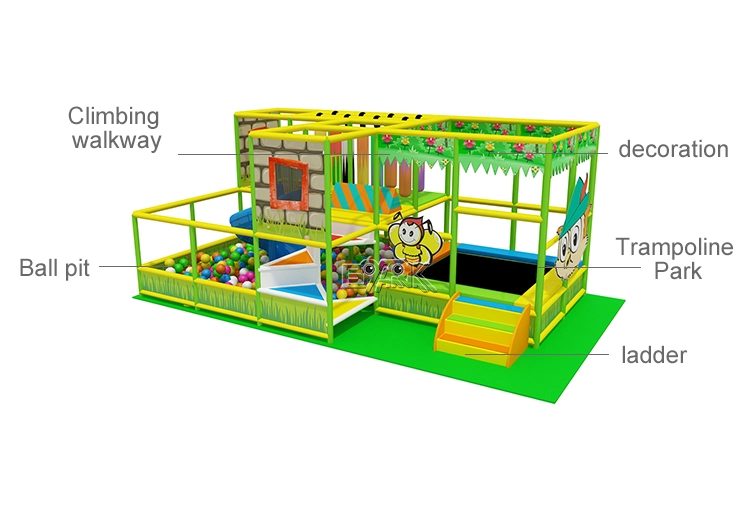
A strong business plan always begins with a thorough understanding of the market environment, particularly in terms of customer demand and behavioral patterns. Indoor playgrounds primarily cater to families with young children, typically within the age range of two to ten years old, although the exact positioning may vary depending on the local demographic structure and income level.
In urban areas, where outdoor play spaces are limited and safety concerns are increasingly prominent, parents are more inclined to seek indoor environments that offer both entertainment and security. At the same time, the growing influence of social media has also shaped consumer expectations, making visually appealing and well-designed playgrounds more attractive and shareable.
From a segmentation perspective, it is useful to divide your target audience into distinct groups, as each segment demonstrates different spending behaviors and usage patterns:
| Segment | Age Range | Behavior | Key Expectations |
|---|---|---|---|
| Toddlers | 1–3 | Parent-driven visits | Safety, soft interaction |
| Young kids | 3–8 | High engagement | Variety, activity |
| Families | Mixed | Group spending | Comfort, convenience |
Understanding these distinctions enables you to design a space that not only attracts visitors but also maximizes their spending potential and frequency of return.
The success of an indoor playground is heavily influenced by its location, as accessibility and surrounding foot traffic directly affect visitor volume. High-performing venues are typically situated in shopping malls, commercial complexes, or densely populated residential areas, where there is a consistent flow of families and potential customers.
When planning your space, it is not simply a matter of size but rather how effectively the available area is utilized. A smaller playground can still be highly profitable if designed efficiently, while a larger space without proper zoning and layout may result in underperformance.
The following table provides a general guideline for space planning:
| Area Size | Recommended Model | Typical Application |
|---|---|---|
| 100–200㎡ | Compact playground | Community centers |
| 300–800㎡ | Standard playground | Shopping malls |
| 1000㎡+ | Large entertainment center | FEC complexes |
In addition to size, attention should be given to layout design, including the separation of age groups, clear circulation paths, and the strategic placement of high-attraction features near the entrance. Professional 3D design planning can significantly enhance space efficiency, often improving utilization rates by up to 30 percent.
The selection of equipment is a critical factor that directly impacts both customer experience and operational sustainability. A well-balanced playground should incorporate a variety of elements that cater to different age groups while maintaining a cohesive design language.
Typically, indoor playgrounds consist of multi-level structures that integrate slides, tunnels, climbing nets, and ball pits into a unified system. These components not only encourage physical activity but also promote exploration and interaction among children. In addition, dedicated toddler areas equipped with softer and simpler play elements are essential for attracting families with younger children.
From a design perspective, durability and maintainability should be considered alongside visual appeal. Equipment constructed with steel frames, high-density foam, and reinforced netting ensures long-term reliability, while modular designs allow for future expansion or modification. Furthermore, selecting a clear thematic direction—whether it be macaron, forest, space, or a customized concept—can significantly enhance brand identity and market differentiation.
Developing a realistic budget is a fundamental step in any business plan, as it determines both the feasibility and scalability of the project. The total investment required for an indoor playground can vary considerably depending on factors such as size, design complexity, material quality, and logistical considerations.
A typical cost breakdown may include the following components:
| Category | Estimated Cost Range |
|---|---|
| Equipment | $10,000 – $120,000 |
| Shipping | $2,000 – $15,000 |
| Installation | $2,000 – $10,000 |
| Decoration | $3,000 – $20,000 |
It is worth noting that sourcing equipment directly from a manufacturer can significantly reduce overall costs by eliminating intermediary margins, while also providing greater flexibility in customization and quality control. This approach not only optimizes initial investment but also contributes to better long-term value.
One of the key advantages of indoor playgrounds lies in their ability to generate diversified revenue streams, which enhances financial stability and reduces dependency on a single income source. While entrance ticket sales typically account for the majority of revenue, additional income can be generated through membership programs, birthday party services, food and beverage offerings, and supplementary entertainment such as arcade machines.
To better understand the financial potential, consider the following example:
| Metric | Typical Value |
|---|---|
| Daily visitors | 80–200 |
| Average ticket price | $5–$15 |
| Monthly revenue | $12,000–$60,000 |
Based on these figures, most well-managed indoor playgrounds are able to achieve a return on investment within six to twelve months, although actual results may vary depending on location, pricing strategy, and operational efficiency.
Safety considerations are fundamental to both regulatory compliance and customer trust, making them a non-negotiable aspect of any indoor playground project. A properly designed playground should incorporate comprehensive safety measures, including soft padding on all structural surfaces, anti-slip flooring, rounded edges, and enclosed safety net systems.
In addition to physical safety features, compliance with international standards such as CE certification, ASTM guidelines, and EN1176 regulations is essential for operating in global markets. These certifications not only ensure product safety but also enhance credibility and facilitate market entry.
A successful indoor playground is not solely defined by its initial setup but also by its ongoing management and operational strategy. Effective day-to-day operations involve maintaining high standards of cleanliness, ensuring equipment functionality, and delivering consistent customer service.
Marketing also plays a vital role in sustaining business growth, with strategies such as social media promotion, membership programs, and partnerships with schools or local organizations contributing to increased visibility and customer engagement. By combining operational excellence with targeted marketing efforts, operators can significantly enhance both customer satisfaction and revenue performance.
Developing a comprehensive indoor playground business plan requires a careful balance of market understanding, strategic design, financial planning, and operational management. While the initial investment may vary, the potential for stable and scalable returns makes indoor playgrounds an attractive option for a wide range of investors.
By working with experienced partners and adopting a structured approach, it is possible to create a playground that not only meets safety and quality standards but also delivers long-term business success.
WhatsApp: +86 139 0307 9263
Contact EPARK for FREE design and quotation
Build a profitable indoor playground with EPARK
Yes, indoor playgrounds can achieve ROI within 6–12 months due to repeat customers and multiple revenue streams.
Most projects cost between $10,000 and $100,000+, depending on size, design, and customization.
A 300–800㎡ playground is the most common and offers a good balance between cost and profitability.
Indoor playgrounds should comply with CE, ASTM, and EN1176 safety standards.
Production and installation usually take 15–30 days, depending on project size.
Yes, equipment can be fully customized in design, theme, size, and branding.
Revenue comes from tickets, memberships, birthday parties, and additional services.


